From Nuclear Reactors to 5G: Technologies NASA is Developing for the First Moon Base
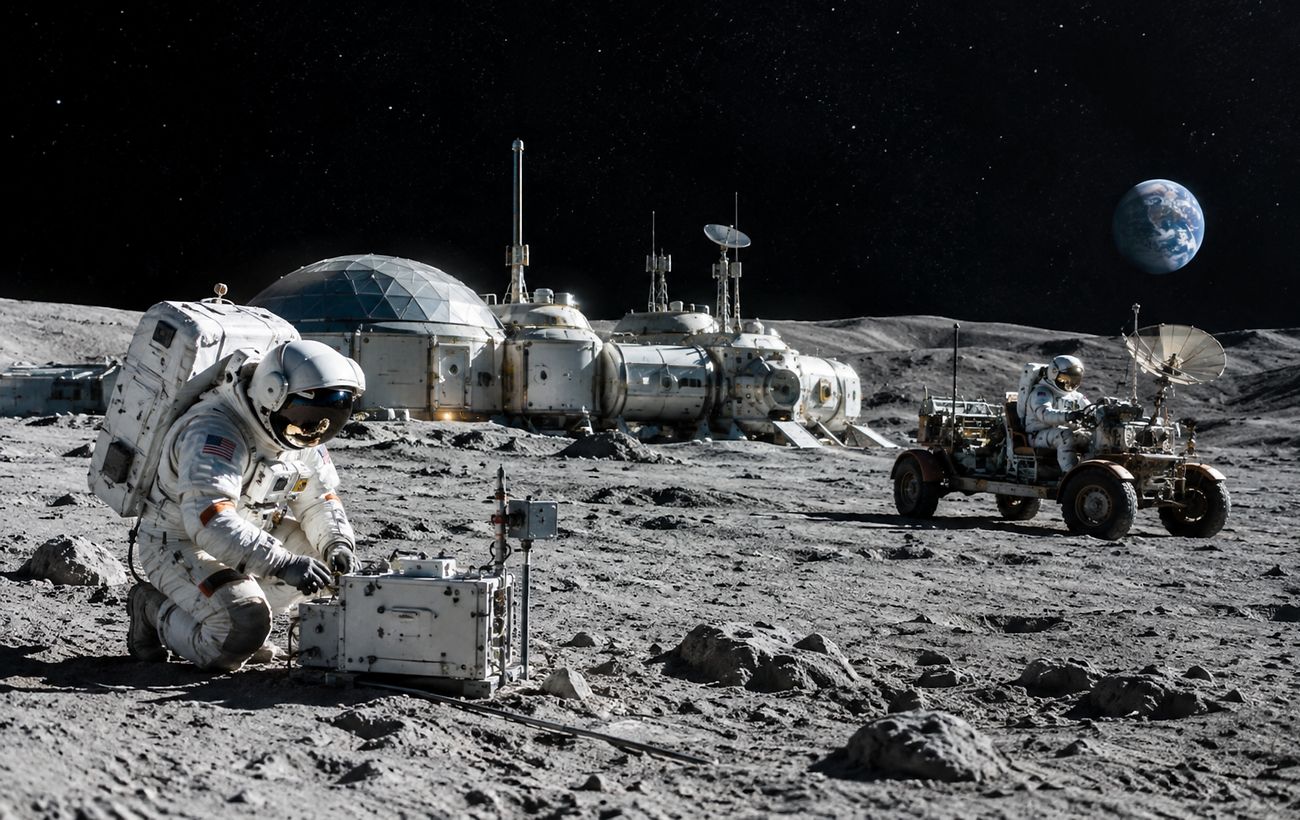
To establish a permanent lunar base, NASA and international scientists are developing seven key technologies, including nuclear reactors and water extraction systems.
 💼Economy
Photo: RBC-Ukraine
Key points
- NASA is developing seven critical technologies for a lunar base.
- The Lunar Reactor-1 launch is targeted for 2030.
- In-Situ Resource Utilization (ISRU) will enable water and oxygen mining.
- Lunar dust and radiation necessitate specialized shielding systems.
The exploration of Earth's natural satellite is entering a new phase where the main challenge is no longer just space flight, but long-term human presence beyond our planet. Building a sustainable base on the Moon requires solving complex engineering problems encompassing power supply, habitat construction, and astronaut safety. The National Aeronautics and Space Administration, alongside international partners, is actively working on a set of innovations without which this ambitious plan remains unattainable.
Energy and Autonomous Resource Supply
Traditional solar panels cannot fully meet the colony's energy needs due to the specifics of the lunar day, which lasts about two weeks. Consequently, the space agency is developing alternative options, notably compact nuclear reactors and radioisotope generators. The launch of the first such reactor is scheduled for the early next decade, ensuring a stable power supply regardless of sunlight conditions.
Beyond energy, resource management is critical, as transporting water and oxygen from Earth is excessively expensive. Plans include mining water ice in shadowed craters at the south pole and processing local soil, known as regolith. Such innovative approaches are designed to provide future settlers with everything necessary for autonomous survival.
Protection Against Harsh Environments
In addition to energy and resource hurdles, engineers must counter lunar dust and cosmic radiation. Aggressive abrasive dust particles can damage equipment, while the lack of a dense atmosphere exposes astronauts to hazardous radiation. To mitigate these threats, specialists are developing special electrodynamic dust shields and protective layers of regolith to safeguard living modules from external dangers.
Source RBC-Ukraine — rbc.ua/ukr/news/vid-dernogo-reaktora-5g-shcho-potribno-nasa-1794836… ↗
Read next
 ⚽Sport
Ivan Kurko Unanimously Reelected as President of the Ukrainian Biathlon Federation
During the reporting and election conference, all 86 delegates unanimously voted to keep Ivan Kurko at the helm of the Ukrainian Biathlon Federation for another four-year…
 👥Society
US Incident: Man Fined for Catching Python in National Park
A visitor to Everglades National Park in the US tried to help the local ecosystem by catching a Burmese python and was fined. Later, the court dismissed the penalty due t…
 🎓Education
Russian Strikes Halt ArcelorMittal Kryvyi Rih: Zelenskyy Calls on India to Respond
The Ukrainian president urged India's prime minister to react to hostile attacks that forced the shutdown of a major metallurgical plant with Indian investments.
The Government Announced Monthly Bonuses for Ukrainian Law Enforcement Officers Starting 2027
Starting in early 2027, Ukrainian police officers will receive a monthly salary supplement of 10,000 hryvnias during martial law. For some personnel, the amount may be hi…
 🛡️Security
Russian forces attack railway station in Sumy region with drone, injuring three
President Volodymyr Zelenskyy reported that Russian troops targeted a railway station in the Sumy region. On the morning of November 21, a drone strike hit the railway te…
 💡Tech
Water drop icon on Samsung smartphones: what the warning means and how to fix it
Experts explained the cause of the system moisture warning on Samsung gadgets and provided tips on how to safely dry the device.