Archaeological Breakthrough: Massive Bronze Age City Discovered in Kazakh Steppes
Researchers have identified 'Semiyarka,' a 140-hectare settlement that challenges traditional views on the origins of urbanism outside Mesopotamia.
 🎓Education
Photo: UNIAN
Key points
- The settlement covers 140 hectares, featuring planned urban zones.
- Evidence shows large-scale bronze production during the 2nd millennium BC.
- The discovery challenges the Mesopotamia-centric view of early urbanism.
- Semiyarka acted as a strategic trade and administrative center.
A team of international archaeologists from University College London (UCL), Durham University, and Toraighyrov University has uncovered a site that could redefine our understanding of ancient history. Located in northeastern Kazakhstan along the Irtysh River, the massive 2nd millennium BC settlement, named 'Semiyarka' (City of Seven Gorges), suggests that complex urban societies existed in the steppes much earlier than previously thought.
The scale of the discovery is immense, covering 140 hectares—roughly the size of 200 football pitches. Semiyarka featured a structured layout, earthen fortifications, and distinct functional zones. At its heart, researchers identified the remains of a monumental building, likely used for administrative or ritual purposes. Its strategic location on a promontory allowed the inhabitants to control trade routes along the Irtysh valley.
A Bronze Age Industrial Hub
One of the most significant findings is the city's advanced metallurgical capacity. Archaeologists found evidence of copper and tin bronze smelting on a scale never before seen in the region. The presence of crucibles, slag, and bronze artifacts proves that these steppe dwellers managed complex production systems rather than simple workshops. Positioned near the Altai Mountains' mineral deposits, the city served as a vital node in Bronze Age trade networks connecting Central Asia with the rest of the continent.
Dr. Miljana Radivojević from UCL noted that "Semiyarka changes our perception of steppe societies," highlighting their sophisticated organization. Professor Dan Lawrence added that the rectilinear structures and monumental architecture indicate that Bronze Age communities in the steppe were developing planned settlements similar to those in the traditionally recognized 'urban' cradles of the ancient world.
Source UNIAN — unian.ua/science/starodavnye-protomisto-v-kazahstani-vono-rozmirom-… ↗
Read next
 🏙️City
Volodymyr Zelenskyy: US pressure on Russia is key to achieving peace
The President of Ukraine emphasized that a real chance for ending the war depends on Washington's decisive stance toward Moscow.
 🛡️Security
EU to summon Russian ambassador over damage to diplomatic missions in Kyiv
The European Union is taking diplomatic action following Russian strikes on Kyiv on November 19 that caused damage to several foreign embassies.
 🎭Culture & Sport
Cynologists name the dog breeds best suited for apartment living
Experts have identified six dog breeds with the most balanced temperament, perfectly suited for city dwellers and families with children.
 👥Society
Women in Business: Growth of Startups and Funding Challenges in Ukraine
Women account for 60% of new business registrations in Ukraine, yet most face significant capital shortages for expansion.
 🇺🇦Ukraine
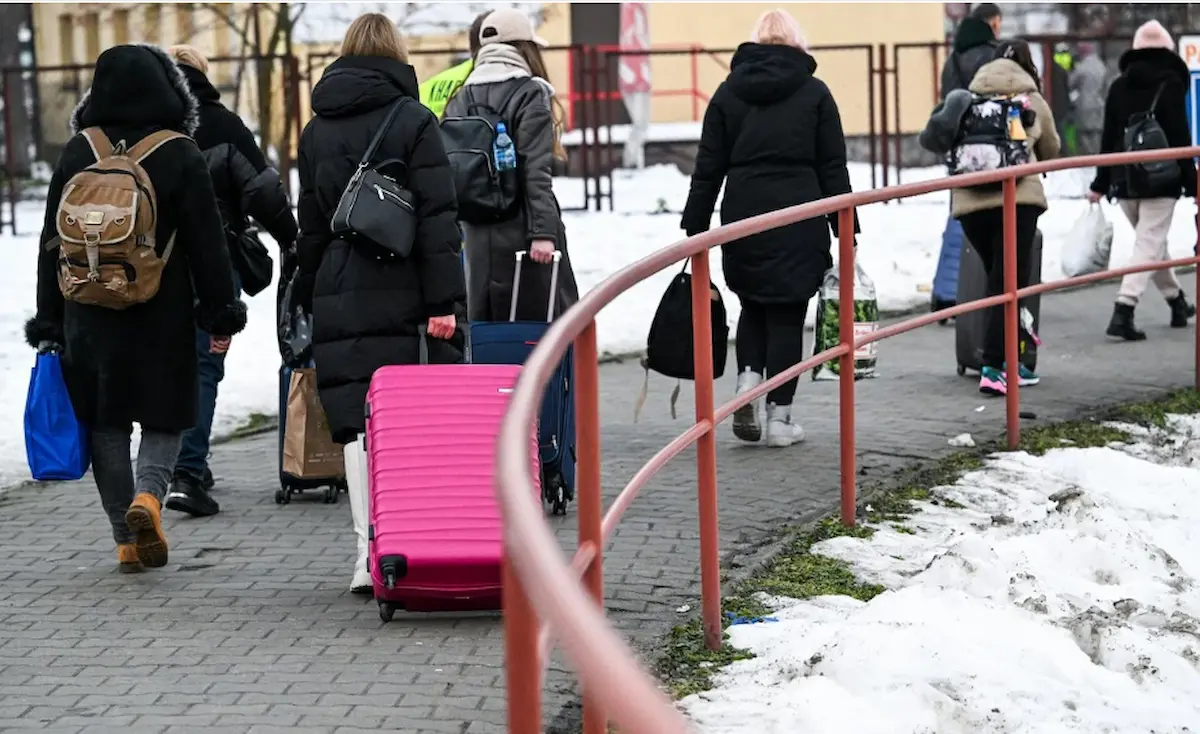
Poland Prepares for Potential Winter Migration from Ukraine: Risk Assessment
Warsaw is developing response plans in case of increased migration from Ukraine this winter due to attacks on energy infrastructure.
 🏛️Politics
The 'Carthage' Case: Parliamentary Inquiry Demands Answers from NABU and SAPO Leadership
Following testimony from SBU General Serhiy Duka, doubts have emerged regarding the integrity of the 'Carthage' operation, prompting a parliamentary inquiry to summon ant…