Ecological Crisis in Tenerife: How Dozens of Introduced Animals Destroy Unique Nature
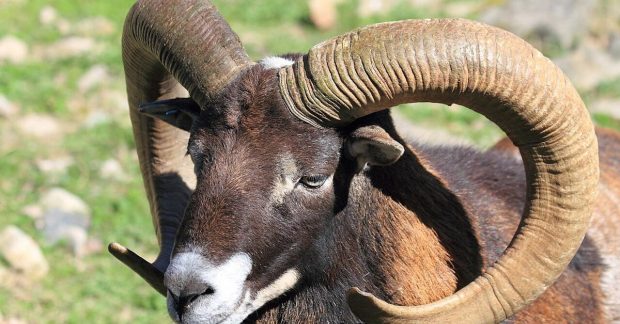
More than forty years ago, mouflons released for hunting triggered a massive ecological threat in the Canary Islands, destroying rare endemic plants.
 💼Economy
Photo: UNIAN
Key points
- In 1971, 11 mouflons were released on Tenerife for hunting purposes.
- Due to the absence of predators, the population grew uncontrollably.
- The animals destroy rare plants and damage the island's soil.
- Mouflons have been officially listed as an invasive species to protect nature.
The ecosystem of the Spanish island of Tenerife is facing a massive crisis due to an anthropogenic factor that became apparent decades later. In 1971, a small group of wild sheep—mouflons, numbering 11 individuals—was released in this area. At the time, the initiative was created to develop sports hunting, but the lack of preliminary impact assessments led to unpredictable results.
Consequences of the Absence of Natural Predators
In the mountainous terrain, the introduced animals found favorable conditions for reproduction. Due to the lack of natural predators capable of controlling the population and the absence of proper state containment mechanisms, their numbers grew rapidly. What was once intended as entertainment has now turned into a serious environmental issue.
Mouflons pose the greatest threat to local flora. They destroy rare endemic plants that grow exclusively on Tenerife, including the unique Teide violet. In addition, intensive grazing and soil trampling disrupt the fragile balance of the isolated ecosystem and accelerate erosion processes.
Government Actions and Lessons for Other Regions
Today, relevant Spanish authorities are forced to add mouflons to the catalog of invasive alien species and implement special population control programs. Controlling animals in mountainous terrain is extremely difficult, so conservation efforts require significant resources.
For residents of Ukrainian communities, such stories serve as an important reminder of how cautious human intervention in wildlife must be. Any ill-considered steps in ecology or management can years later turn into catastrophic damage to the local environment and the regional economy.
Source UNIAN — unian.ua/ecology/mufloni-postavili-na-mezhu-katastrofi-prirodu-ostr… ↗
Read next
 🛡️Security
Cyprus expels two Russian diplomats over espionage suspicions
Cyprus has expelled two Russian diplomats suspected of gathering classified information and attempting to bypass EU sanctions.
 🛡️Security
Power supply restored in Sarny district following enemy attack
Electricity has been restored in the Rivne region after a November 20 attack left over 50 settlements in the Sarny district without power.
 👥Society
Autumn Rose Garden Care in Varash: Pruning and Protection Tips
Experts advise against premature pruning of roses until persistent frosts arrive to ensure the plants enter dormancy properly.
 🛡️Security
Elderly woman rescued from rubble in Dymer as death toll rises
Emergency services in Dymer, Kyiv region, have rescued an 89-year-old woman from a destroyed building. The death toll from the drone strike has reached nine.
 🛡️Security
Russian corvette 'Merkury' reportedly hit by Ukrainian drones in Libya
An explosion occurred on board a Russian military vessel in Benghazi, causing a massive fire. According to Western media, Ukrainian maritime drones may be responsible for…
 🏛️Politics
Russia is testing NATO's defense algorithms through airspace violations, says Dmytro Kashchenko
Retired Ukrainian Colonel Dmytro Kashchenko stated that Russia uses drone and missile incidents in NATO countries to test the reaction speed of air defense systems.